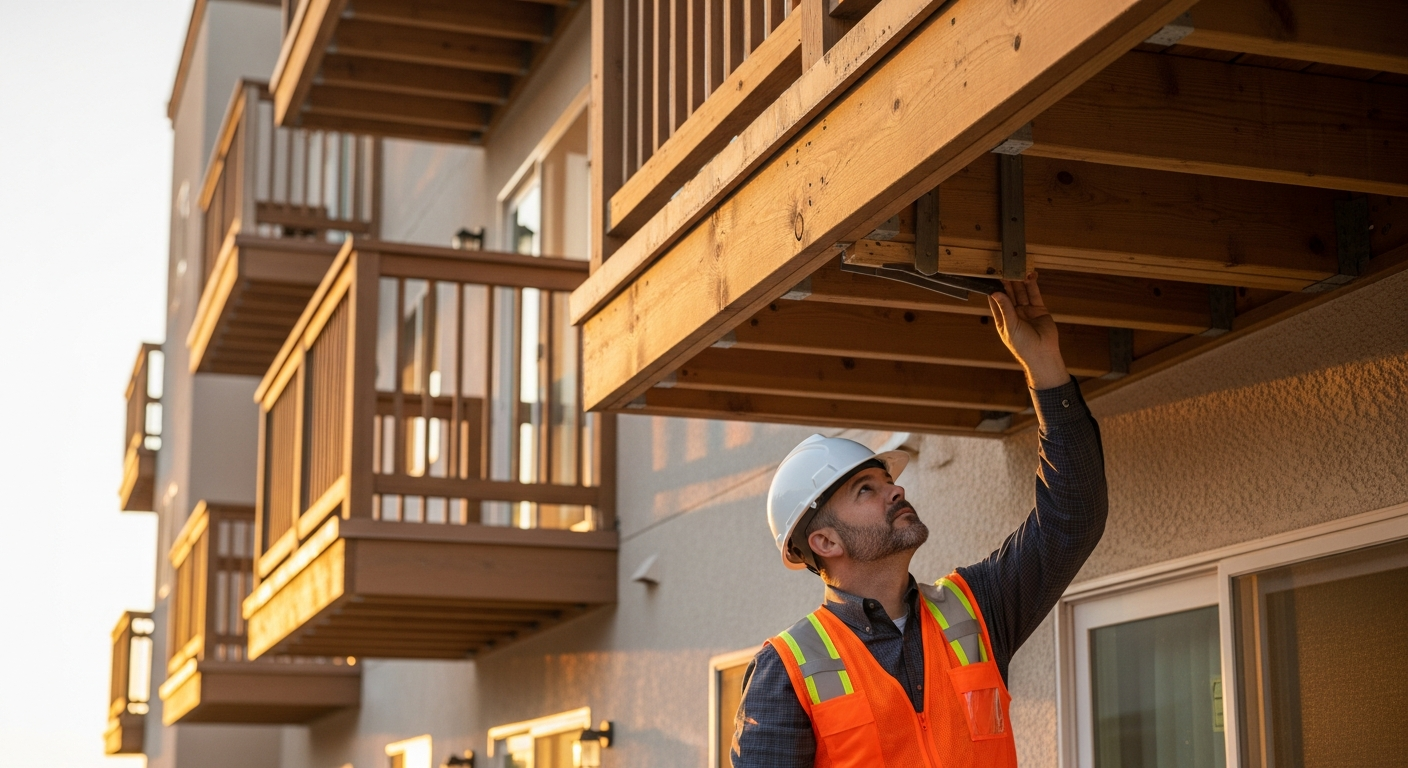
Who Does This Affect?
Senate Bill 326 applies to condominiums and HOAs with wood-framed exterior elevated elements (balconies, decks, walkways, stairways) that are 6 feet or more above grade.
Unlike SB-721 (which covers apartments), SB-326 places the compliance responsibility squarely on the HOA board. Inspections must be performed by a licensed structural engineer or architect — not a general contractor.
Datum Property Services is a licensed California Class B general contractor (CSLB #1140201) qualified to perform SB-326 exterior elevated element inspections in partnership with licensed architects.
Risks of Delay
- Daily Fines: Local jurisdictions can impose fines of $100–$500 per day for non-compliance.
- Board Liability: HOA directors have fiduciary responsibility — personal liability if inspections are skipped and a failure occurs.
- Insurance Denial: Carriers may deny claims on uninspected elevated elements, leaving the HOA exposed.
- Lien on Property: Unpaid fines or uncompleted repairs can result in liens against the property.
SB-326 Key Facts
9-Year Inspection Cycle
Inspections are required every 9 years — less frequent than SB-721's 6-year cycle, but the standards are stricter.
Engineer or Architect Required
Must be performed by a licensed structural engineer or architect — contractors alone cannot perform SB-326 inspections.
"Reasonable Certainty" Standard
Inspectors must certify structural adequacy to a "reasonable degree of certainty" — requiring thorough invasive testing.
15-Day Emergency Reporting
Immediate threats to safety must be reported to the local building department within 15 days and repaired immediately.
Process Timeline
From initial document review to stamped engineer report — here's how we ensure your HOA is fully compliant.
Document Review
Review HOA records, CC&Rs, building plans, and element inventory
Visual Survey
Walk all exteriors and photograph every exterior elevated element
Invasive Testing
Open select elements to inspect concealed load-bearing and waterproofing components
Lab Analysis
Send samples for moisture, decay, or corrosion testing as required
Report Delivery
Stamped structural engineer report with findings and repair priorities
What We Inspect
SB-326 requires inspection of both load-bearing components and waterproofing systems on all exterior elevated elements.
Load-Bearing Components
Evaluate structural members supporting exterior elevated elements for adequacy
Waterproofing Systems
Assess membranes, coatings, and drainage that protect structural elements
Joist-to-Ledger Connections
Verify structural integrity of joist-to-ledger attachments and hardware
Flashing & Sealant Joints
Check flashing installations and sealant integrity at transitions
Wood Framing Condition
Evaluate wood members for rot, decay, and structural soundness
Guardrail Attachments
Test guardrail connections, height compliance, and load capacity
Drainage & Slope
Confirm proper water drainage slope and absence of ponding
Fastener Corrosion
Inspect bolts, screws, and connectors for rust and degradation
Walking Surface Condition
Evaluate deck surfaces for wear, cracking, and trip hazards
Inspection Gallery
See our inspection process in action — from on-site assessments to detailed reporting.
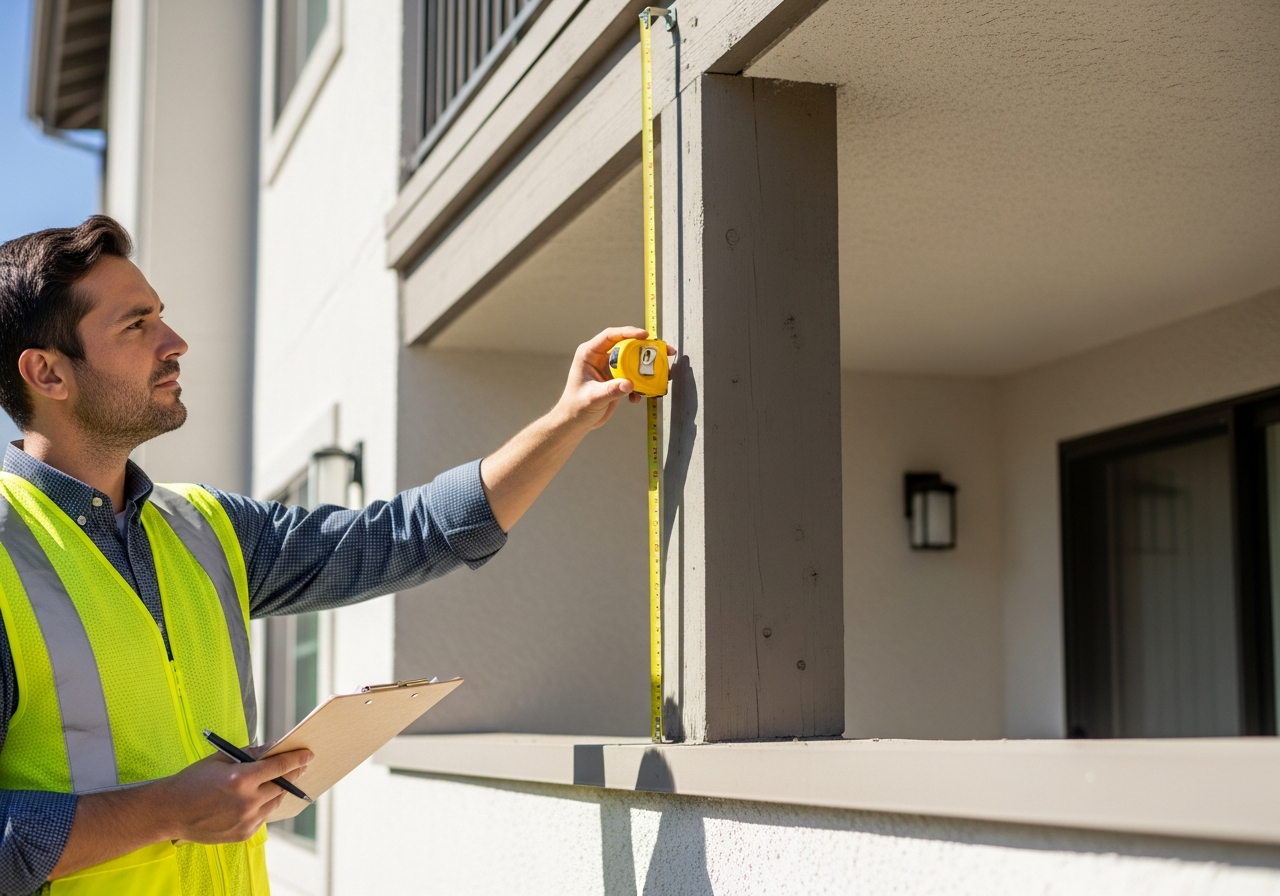
Balcony Connection Inspection
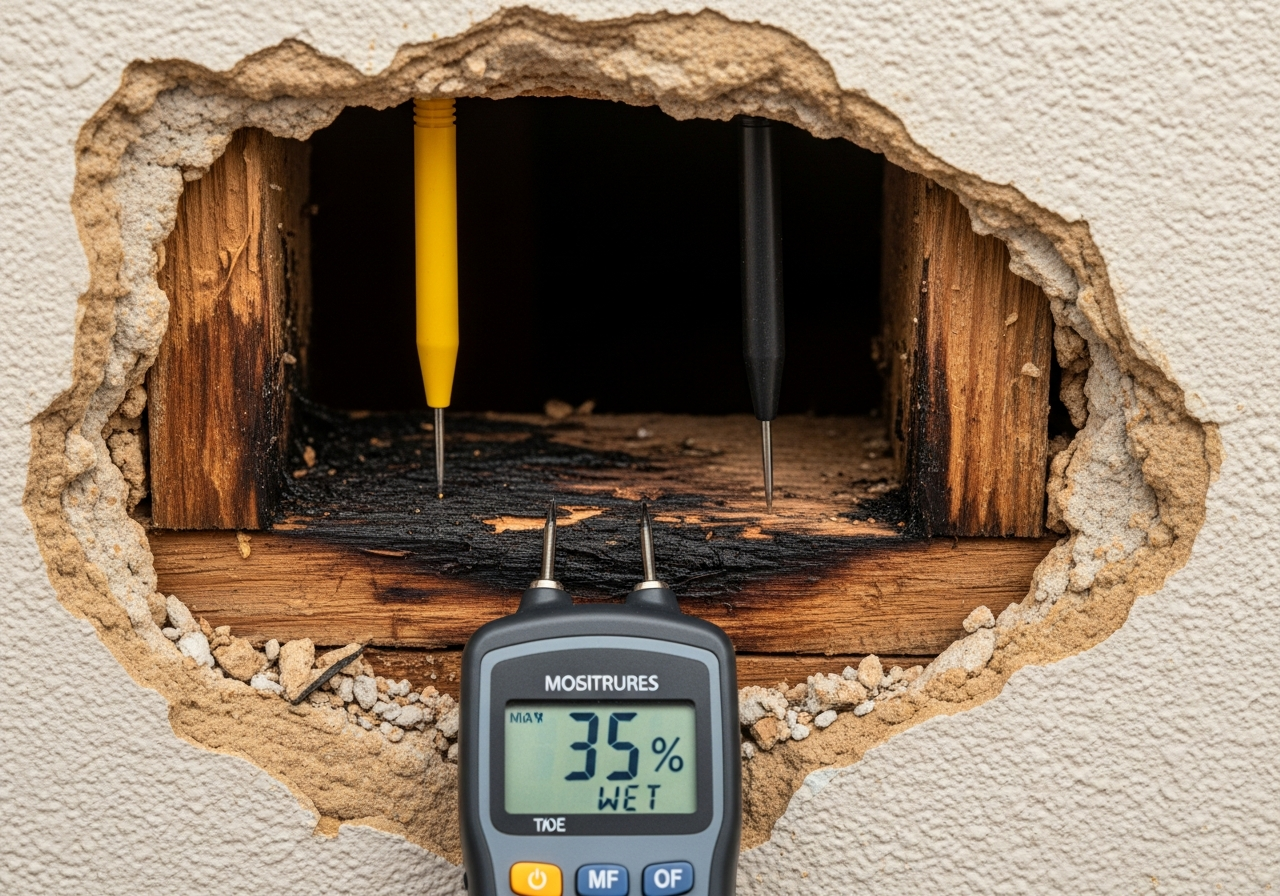
Moisture Meter Testing
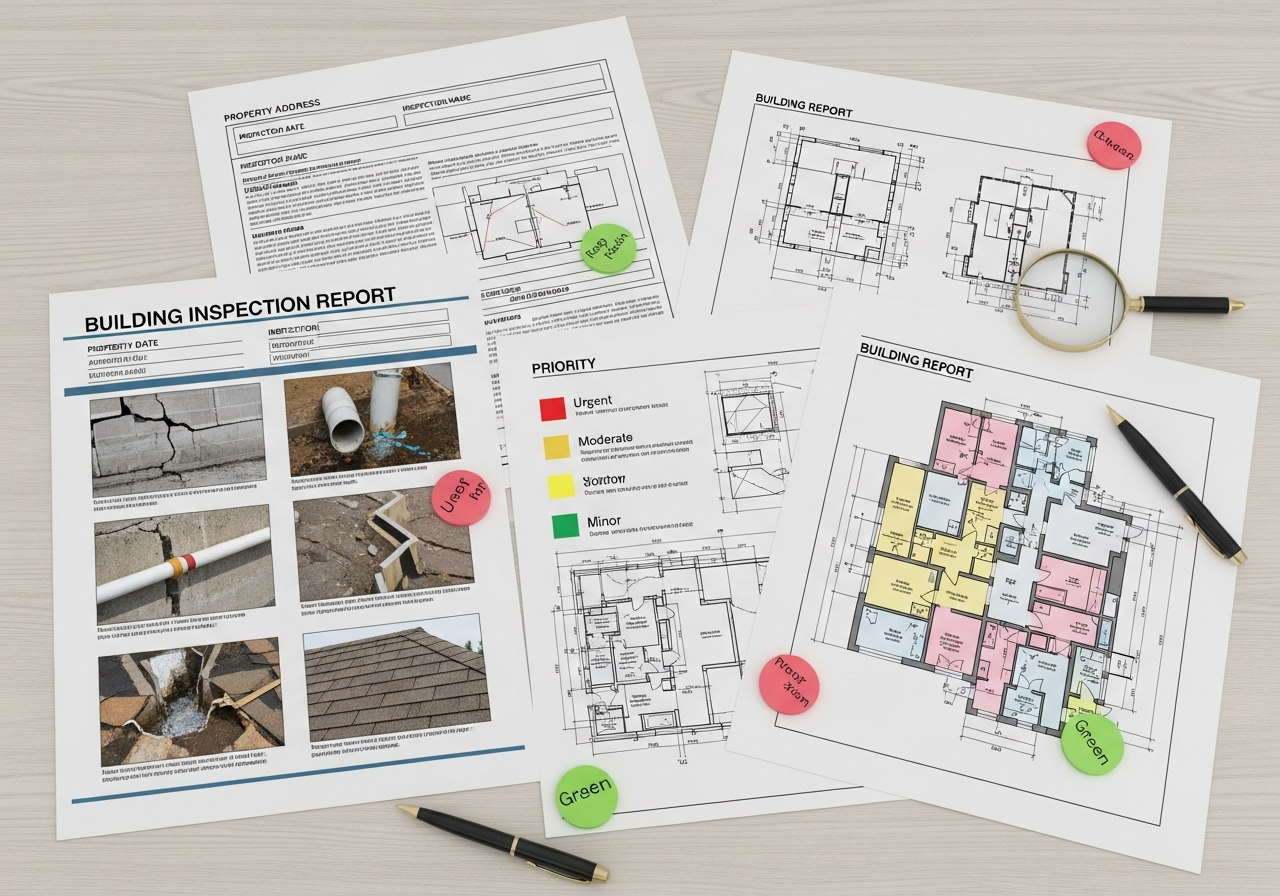
Detailed Findings Report
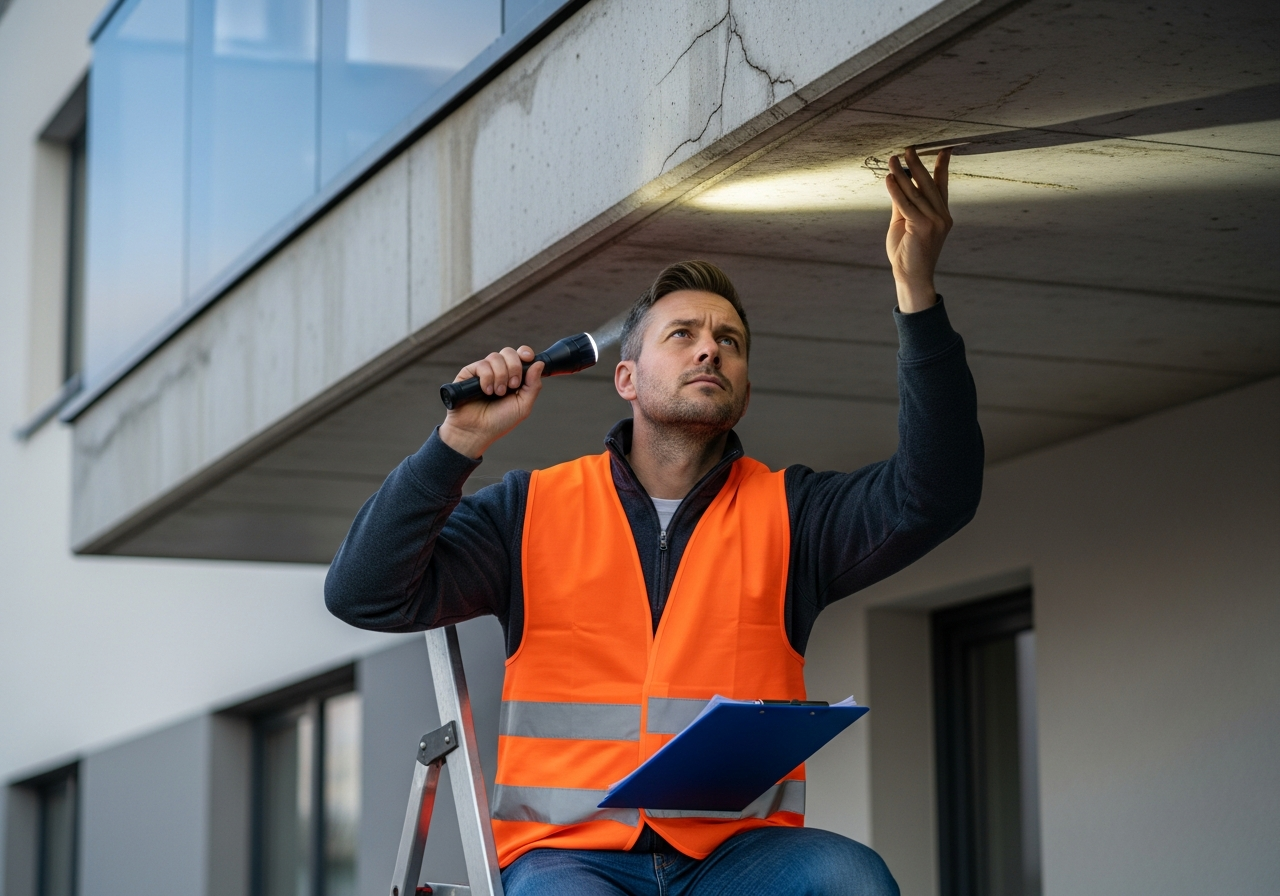
Visual Assessment Documentation
Sample Deliverables
Here's what your HOA receives after a completed SB-326 inspection.
What Your HOA Will Receive
Stamped inspection report by a licensed structural engineer or architect
Photo documentation of every inspected element
Priority-ranked repair recommendations
Cost estimates for remediation work
Compliance timeline and next inspection cycle
Digital copy for HOA records and city submission
Licensed General Contractor Advantage
Most firms can only inspect. Datum Property Services is also a licensed general contractor (# 1140201) — so when repairs are needed, we handle everything in-house. No juggling vendors, no finger-pointing, no delays.
Inspect
Stamped engineer report meeting SB-326 requirements
Report
Clear findings with prioritized repair recommendations
Remediate
Licensed construction to complete all required repairs
Frequently Asked Questions
Common questions about SB-326 inspections for condos and HOAs.
SB-721 vs SB-326 Comparison
Not sure which law applies to your property? Here's a quick reference.
| Feature | SB-721 | SB-326 |
|---|---|---|
| Applies to | Apartment buildings, 3+ units | Condominiums / HOAs |
| First deadline | January 1, 2026 | January 1, 2025 |
| Re-inspection cycle | Every 6 years | Every 9 years |
| Qualified inspectors | Architect, civil/structural engineer, certified building inspector, or Class A/B/C-5 general contractor | Licensed structural engineer or architect only |
| Sample size | At least 15% of each EEE type | Statistically significant sample determined by inspector |
Related Services
If your portfolio also includes apartments with exterior elevated elements, see our SB-721 inspections for multifamily properties. When repairs are needed, our licensed construction team can remediate and coordinate permits. Request a fast estimate for any service.